Europe must stop working against its own strengths
We have the technology, the industry and the standards. Why do we let our own strengths hold us back? How can connecting hardware, software and services make those advantages work for our security, our businesses and our ability to act?
From technology to adoption
Europe does not have a prototype problem, and we are not short of technology. We are short of organisations prepared to adopt it. The real problem is the transition from something that works to something an organisation is willing to deploy and scale.
In my field, I see organizations asking for innovation while continuing to do what they already know, because familiar processes feel measurable and controllable. A new solution introduces uncertainty. Its value is not fully proven, the outcome cannot be guaranteed and somebody has to accept responsibility for the decision.
But complete certainty never arrives. Meanwhile, the technology, the market and competitors continue to evolve.
Hardware, software and services
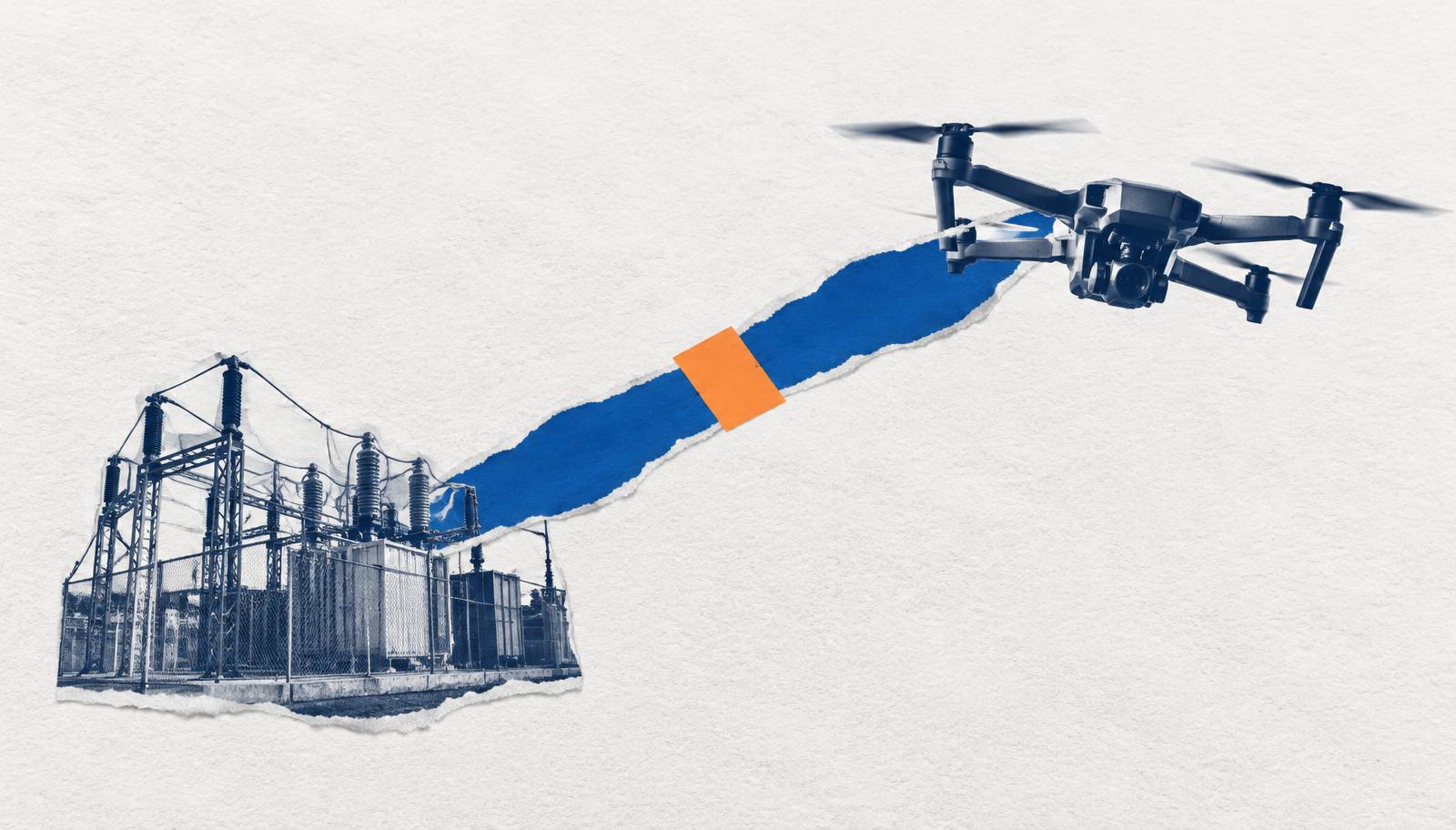
For me, this is where hardware, software and services need to come together. A drone provides the means to inspect an installation. Software helps interpret the information. A service connects that capability to the people, procedures and systems that determine what happens next. The commercial model matters because it determines whether an organisation can adopt the technology and use it every day.
At Launch4, an energy-native B2B technology company based in Spain, we are working with DroneStar and GSIS on that connection. DroneStar provides the hardware. GSIS turns it into a white-label service, so a security company can offer autonomous drone surveillance under its own brand without investing years in hardware, software and R&D.
Drone-as-a-Service itself is not new. What matters is how we make it useful and scalable.
I would make the test very practical: has the technology been tested in conditions similar to mine, and what problem will it solve in my daily operation? A specification tells me what the technology should be able to do. A pilot shows me whether it actually works with my people, my procedures and my existing systems.
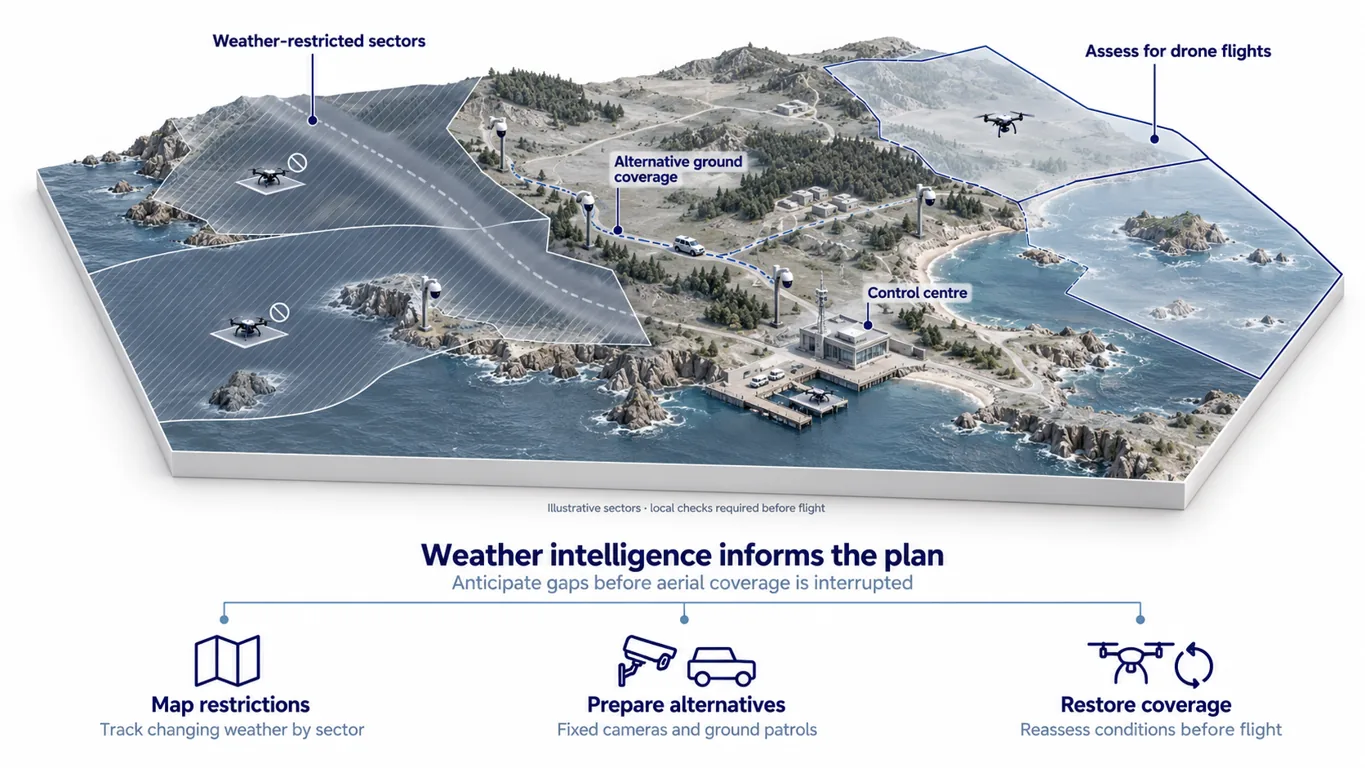
We also have new options for understanding the environment in which these systems operate. CAELIS by Almena offers a new way to read and use the sky, bringing satellite observations and meteorological intelligence into operational planning. That information can help us anticipate interruptions, prepare alternatives and assess where drone missions may continue or resume.
One asset, a shared picture
Consider a solar plant with a storm approaching. The owner needs to understand how production may change, what that means for its market position and how to maintain supervision while aerial inspections are unavailable.
Combining weather forecasts, a calibrated plant model and operating data can help estimate the fall in generation and its likely recovery. The operator can then assess adjustments to energy-market commitments or battery scheduling, according to trading deadlines, available energy and existing obligations. Better information could help manage the financial exposure between expected production and actual delivery.
Drone inspections add evidence from the installation itself. Before the storm, a mission may document its condition if there is enough safe flight time. Afterwards, production analysis can identify areas that have not recovered as expected and help prioritise inspections once flights are authorized.
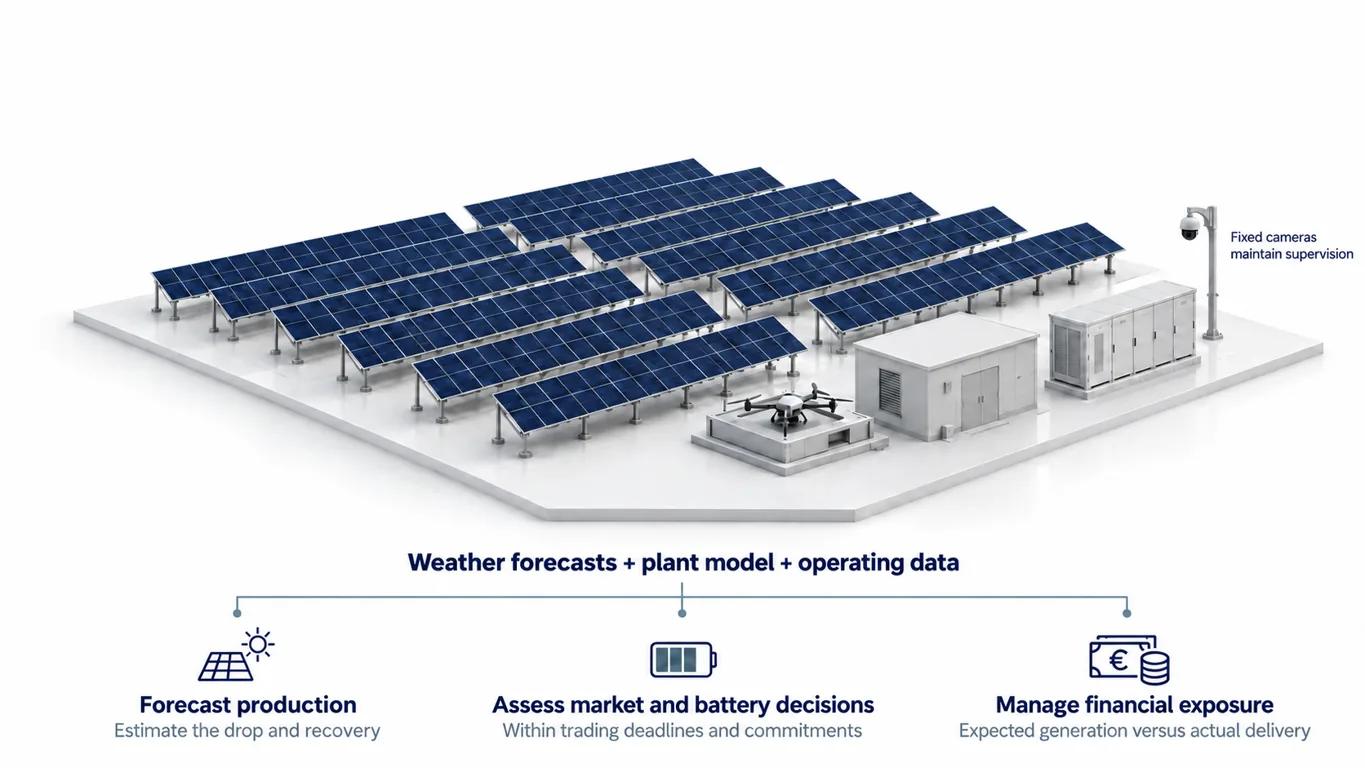
What interests me is the connection between those decisions. Production, money and physical protection are all part of operating the same asset. A useful service helps the people responsible act on a shared picture of what is happening.
A coordinated service
Now imagine thirty substations across a region. Instead of building a separate drone operation and inspection team around every site, the company can connect the drones, alarms and operational data to one service.
The control centre can prepare alternative coverage when weather may interrupt aerial surveillance, then organise inspections according to equipment alarms, the importance of each site and the availability of operators. Images can help assess visible damage and access obstacles before technical teams travel.
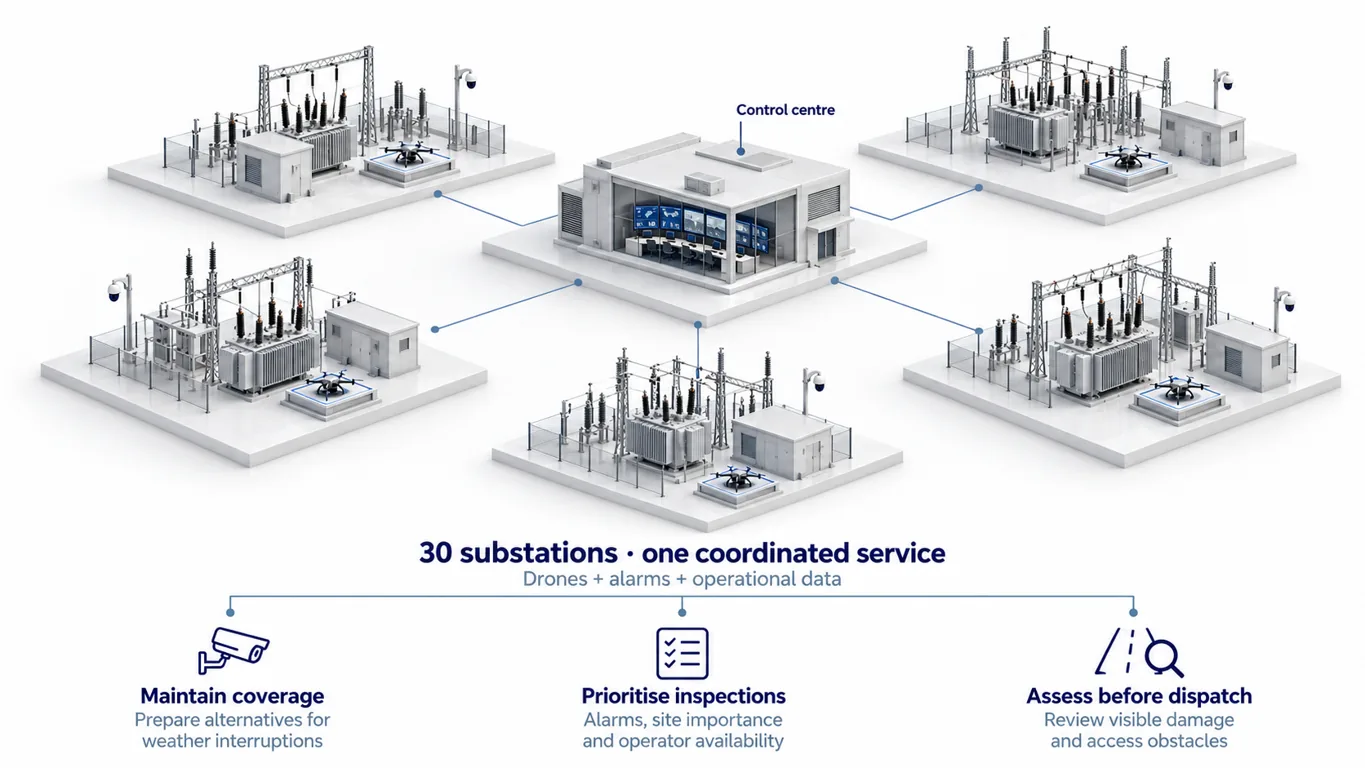
So the real value is not having more drones. It is using a distributed fleet as one coordinated security service.
Planning for interruptions
In defence planning, I see the same need to prepare for interruptions. Mapping expected weather restrictions can help a control centre assess which sectors may remain available for drone missions and where other means of supervision will be needed. As conditions change, the plan can change with them. Every flight still depends on local conditions, the limits of the aircraft and authorised procedures.
This is how storm risk can become information for strategy: anticipating gaps, allocating resources and preparing to restore coverage.
Our role is not to detect hostile drones. Our role could be to help the security team anticipate when its own aerial surveillance may become unavailable and prepare an alternative before that happens.
Europe’s ability to act
Europe is very good at regulation, security protocols and structured processes. That can be a real competitive advantage because it helps us build technology that people can trust. Europe's challenge is therefore to keep its standards while learning to make controlled decisions under uncertainty.
Money does not create capability by itself. A larger budget is useful only if Europe can convert it into operational capability in time.
I want us to judge progress by that ability to deploy, learn and improve.
The competitive advantage is not having the final answer. It is being able to change the answer faster.
Your feedback
Was this article useful?
You finished the piece
What do you want to do with it?
Share it with AI, or rewrite it for your channel, in one place.